Sixt · Dynamic web presence
200,000+ pages, one visual language, +25% click-through
Case study
2023–24
Web · 20 domains · 20 languages
Context
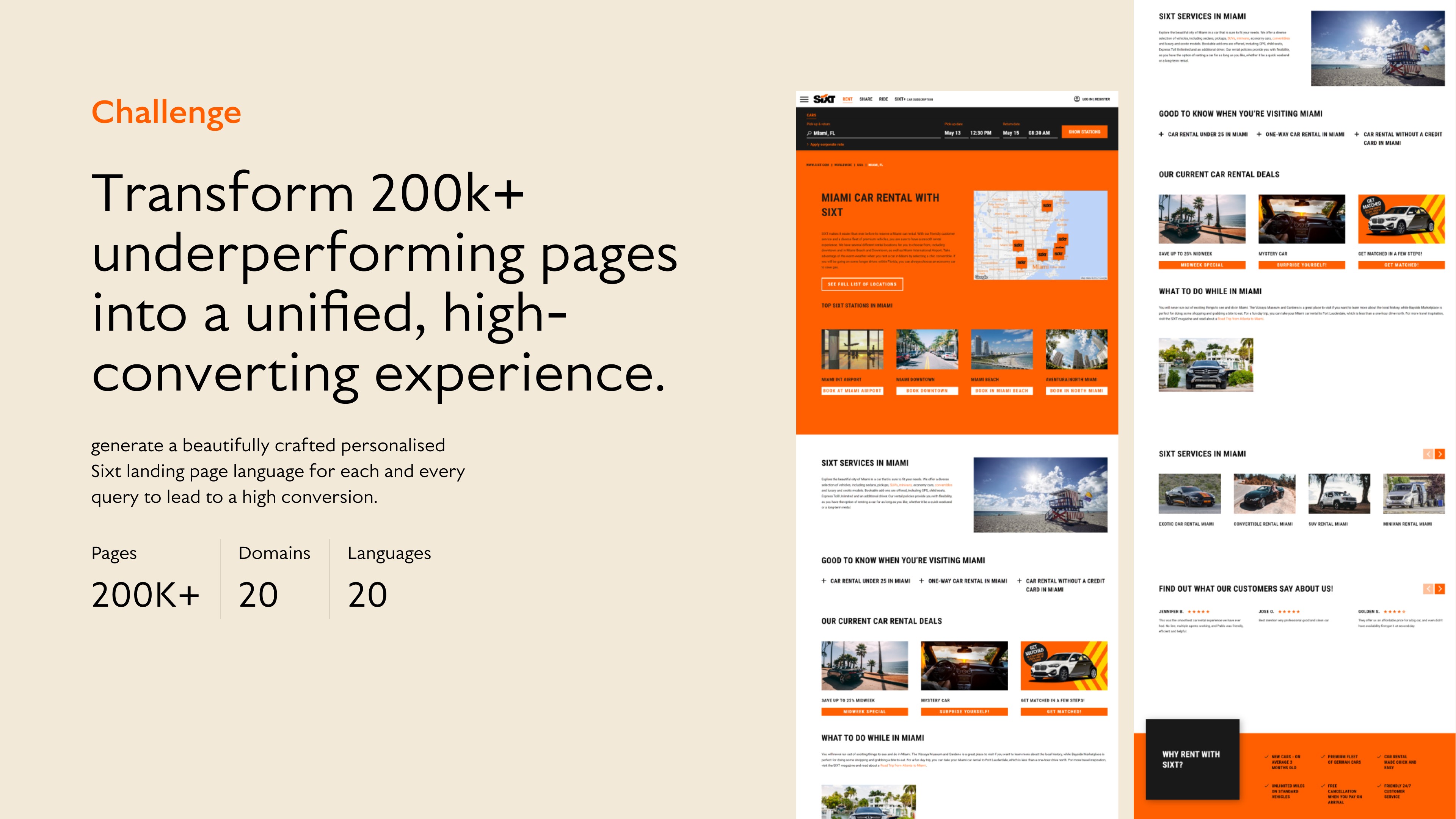
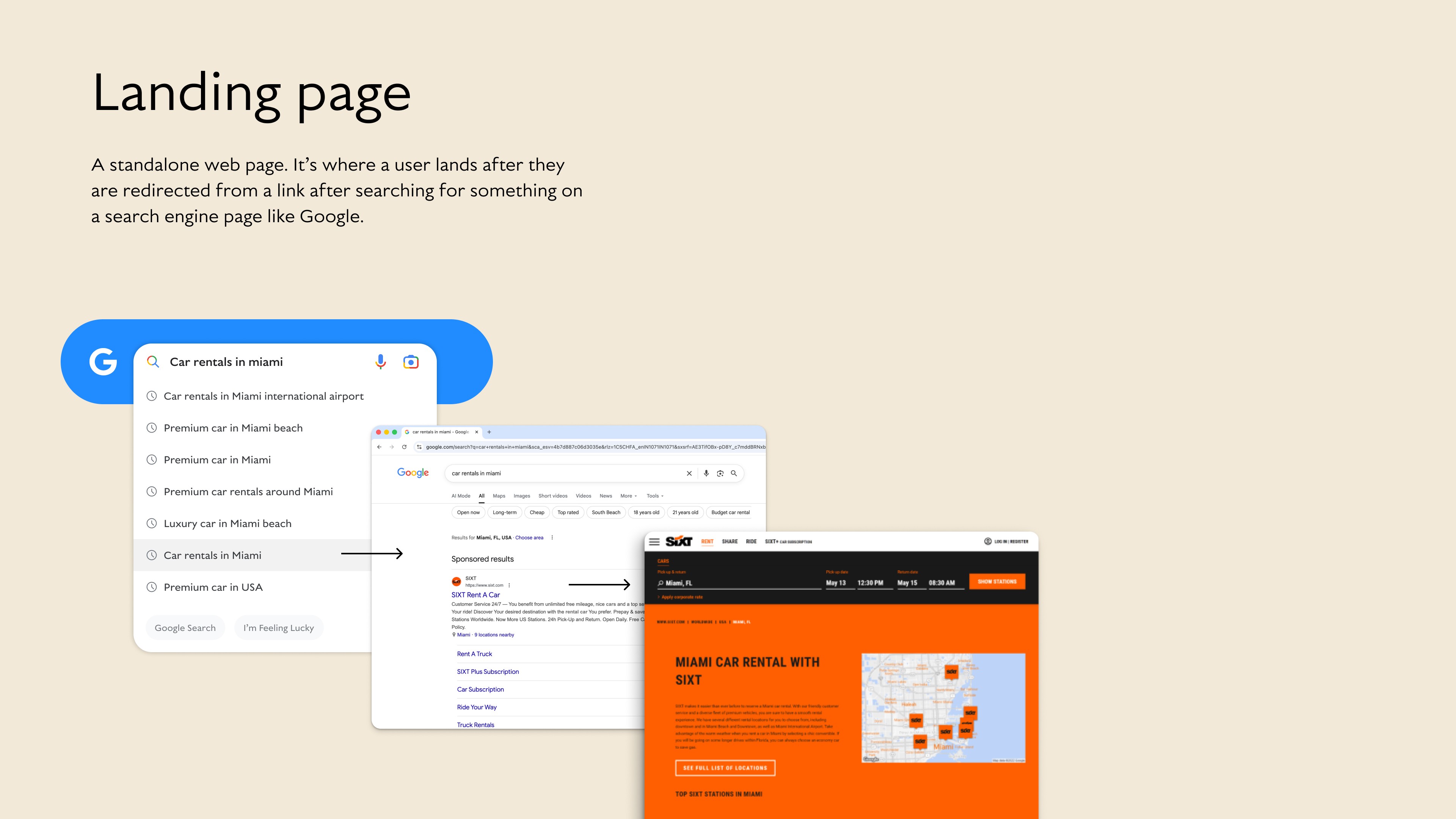
Many rentals start on Google, on a Sixt page for a city, airport, country or car type. Across 20 domains and 20 languages, those 200,000+ pages had grown inconsistent and underperforming.
The goal: a personalised landing page for every search, built to convert.

The problem
Inconsistent layouts, content and information.
Empty pages when there were no offers to show.
Random hero images that cropped badly on mobile.
No trust signals, and no self-help, so visitors called the call centre instead.
Key decisions
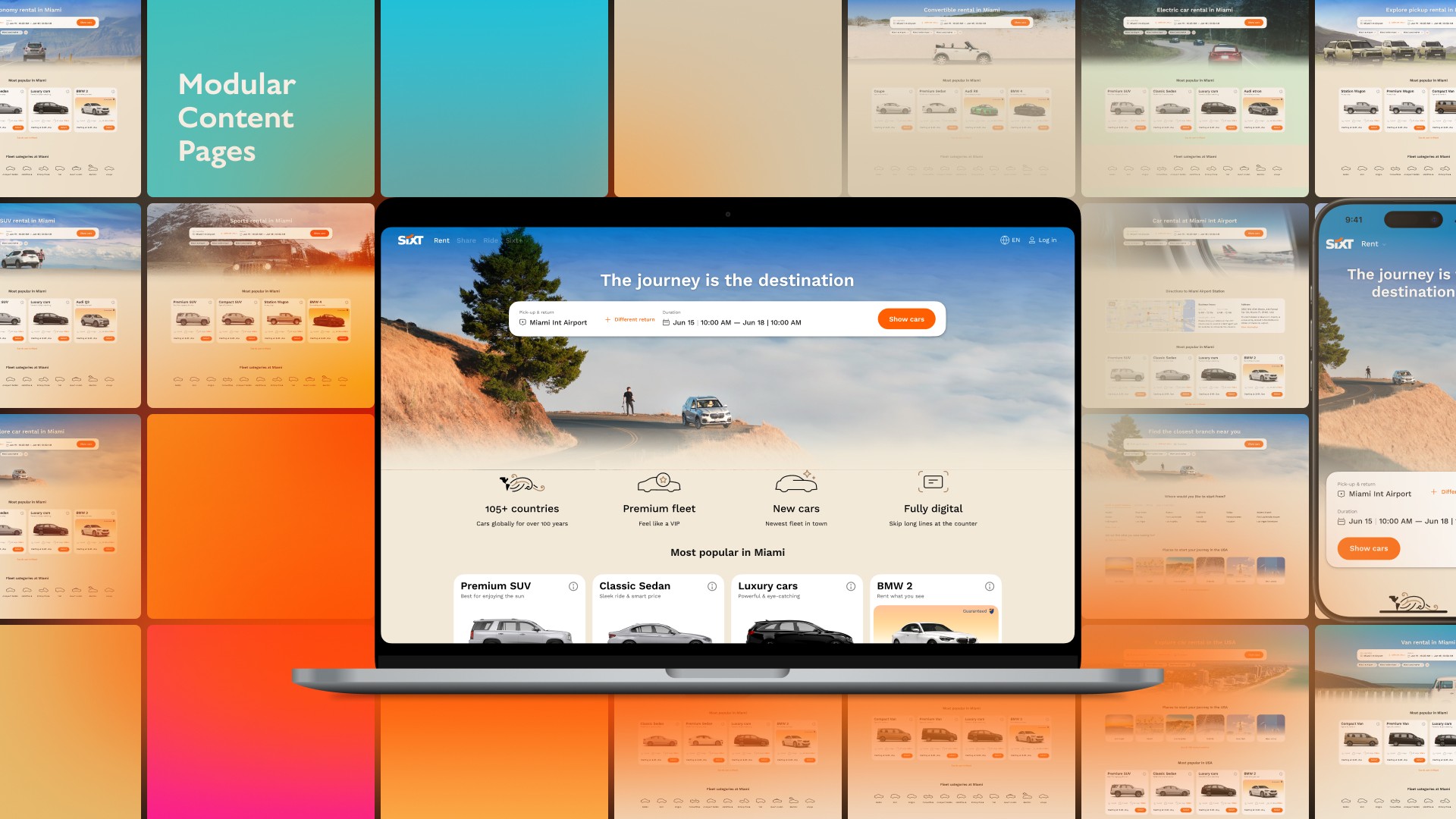
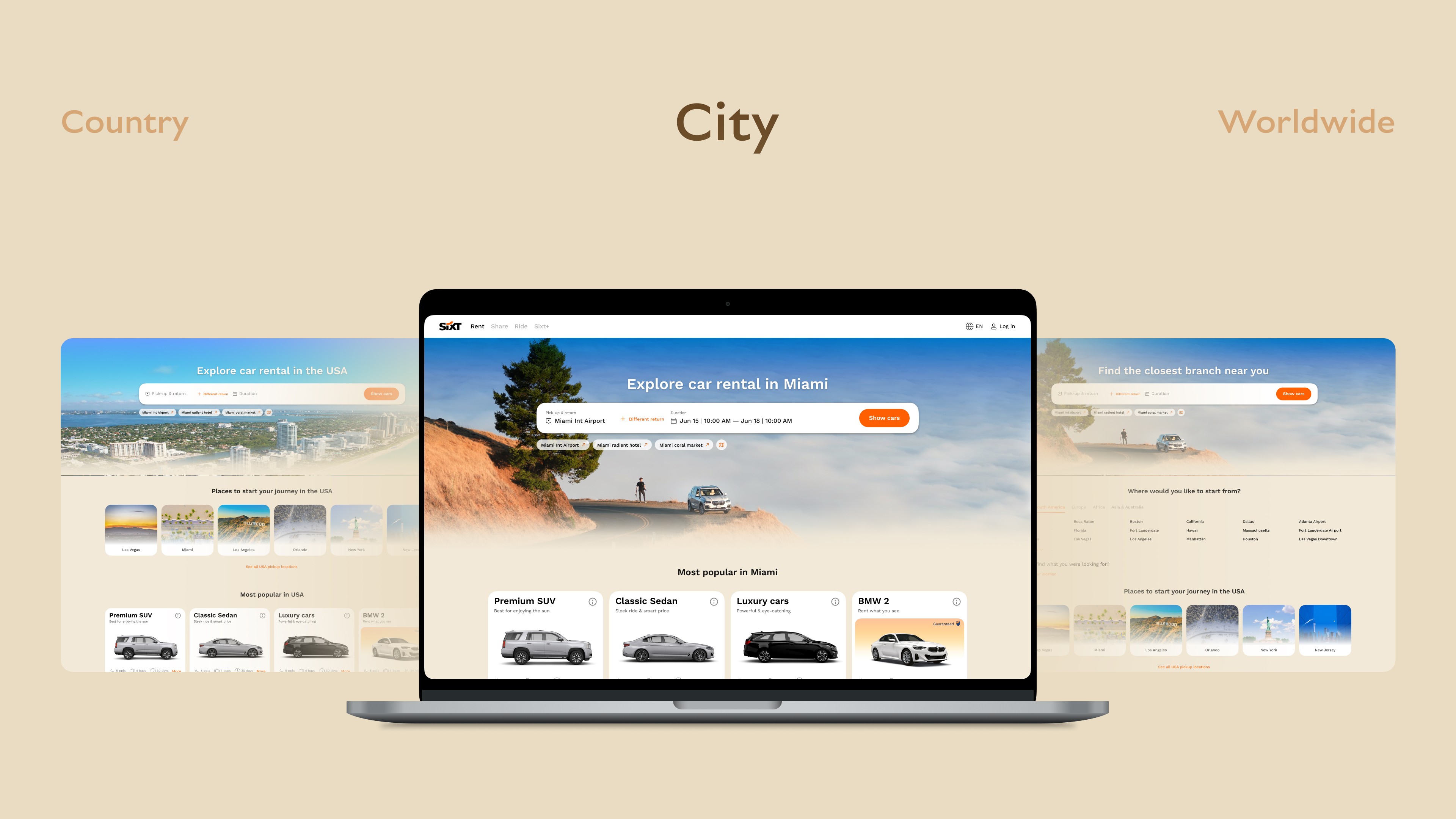
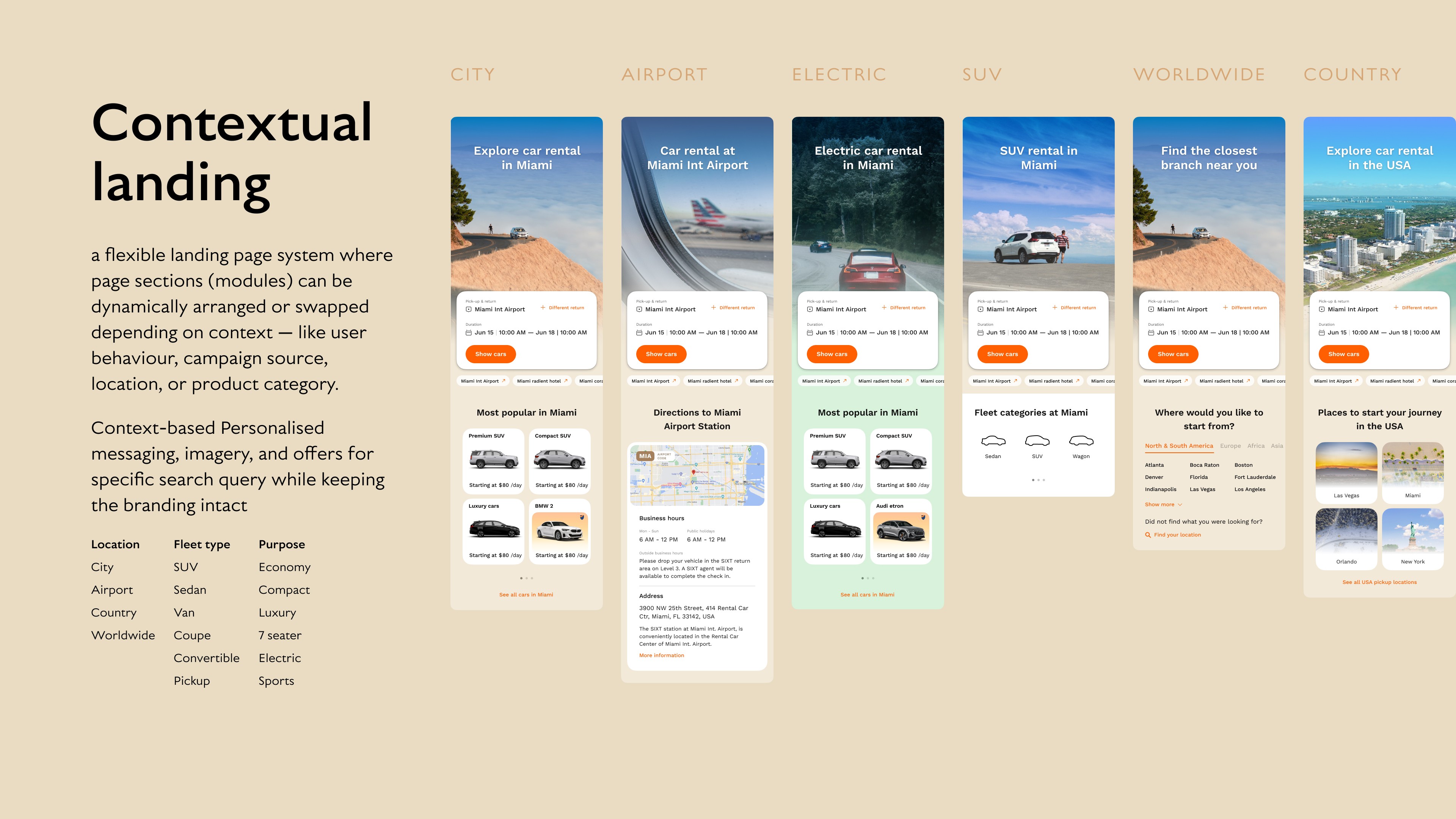
One modular system for every search. City, country, worldwide, airport and fleet pages are all built from the same modules.
Always something to offer. Offer modules by car category, so no page is ever empty.
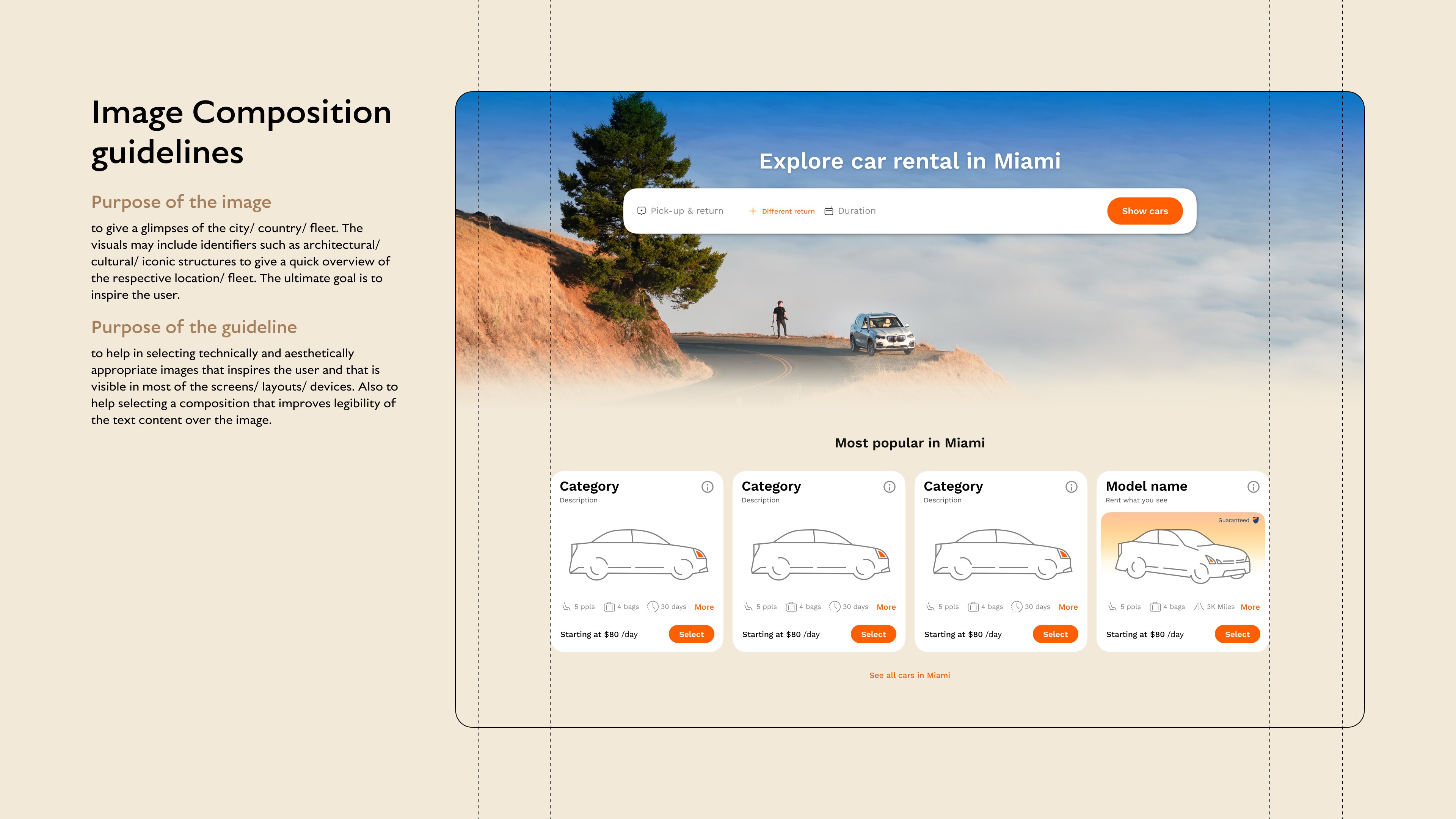
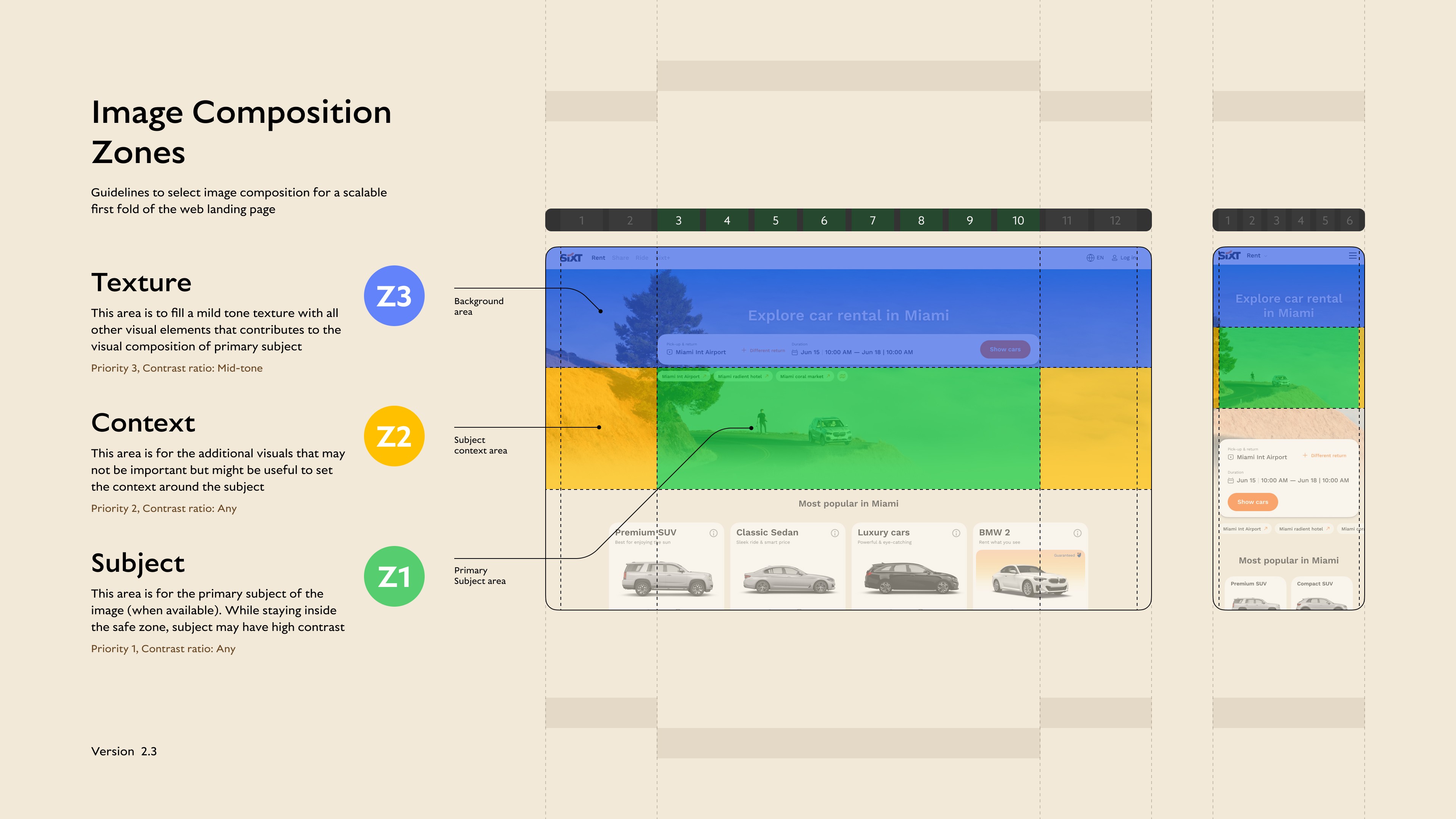
An image standard that works at scale. Composition zones and cropping rules per vehicle category for mobile and desktop, generated automatically. Search, app and marketing teams later adopted the same standard.
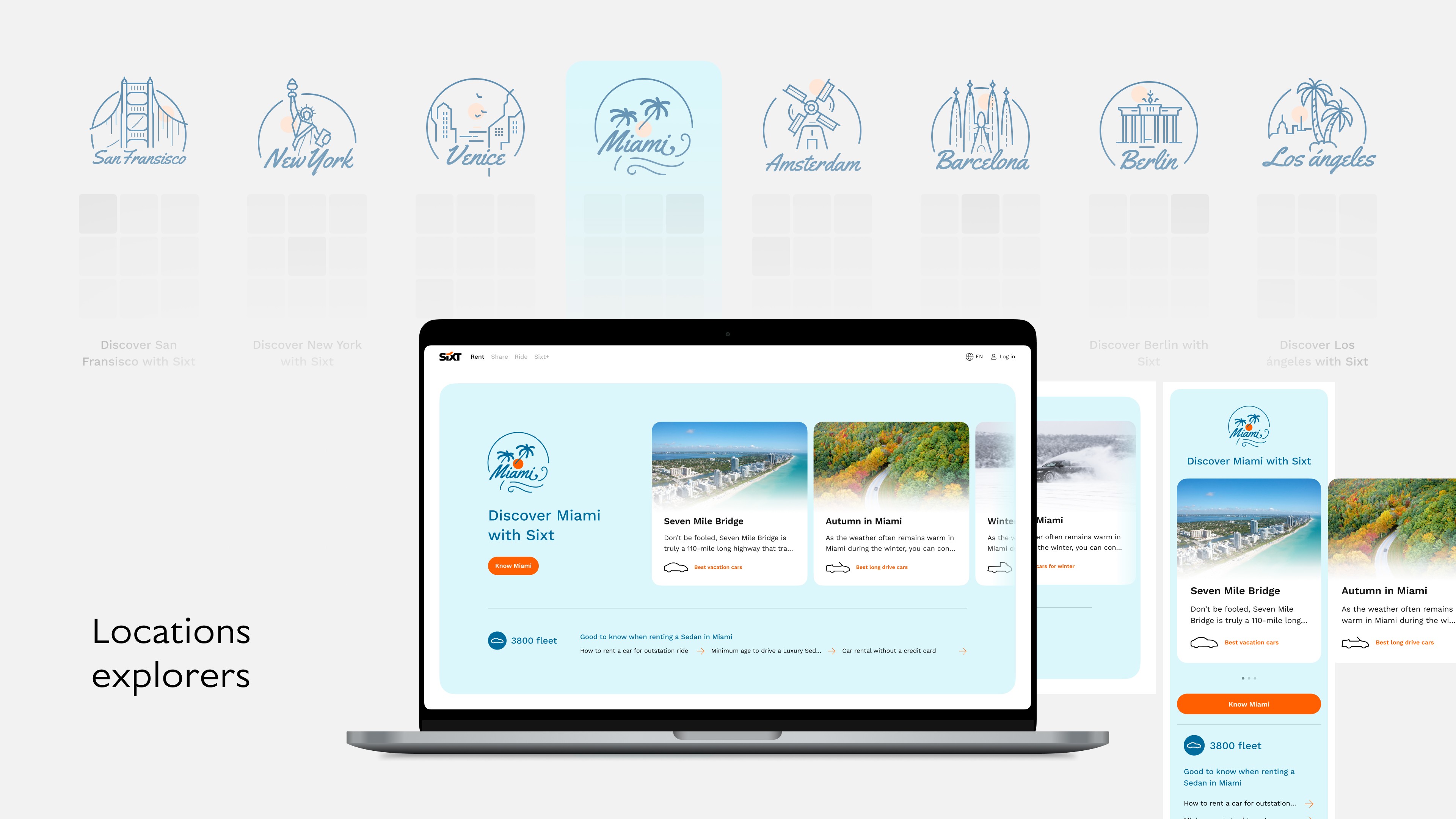
Trust and self-help on the page. Reviews, location details and answers to common questions, before anyone has to call.
Roles & responsibilities
I was the visual experience designer on the project, working from the research team's framework. I designed the page language and created the imagery and vehicle standard, then worked with engineering and SEO to build it into page generation.
Outcome
↑25%
click-through rate
↑3%
conversion rate
↑5%
show-offer-list rate
↑11%
average session duration
65%
drop in average CLS (layout shift)
Tested — Beta in Miami: 20K users · 40 zip codes · 4 weeks
Contextual webpages


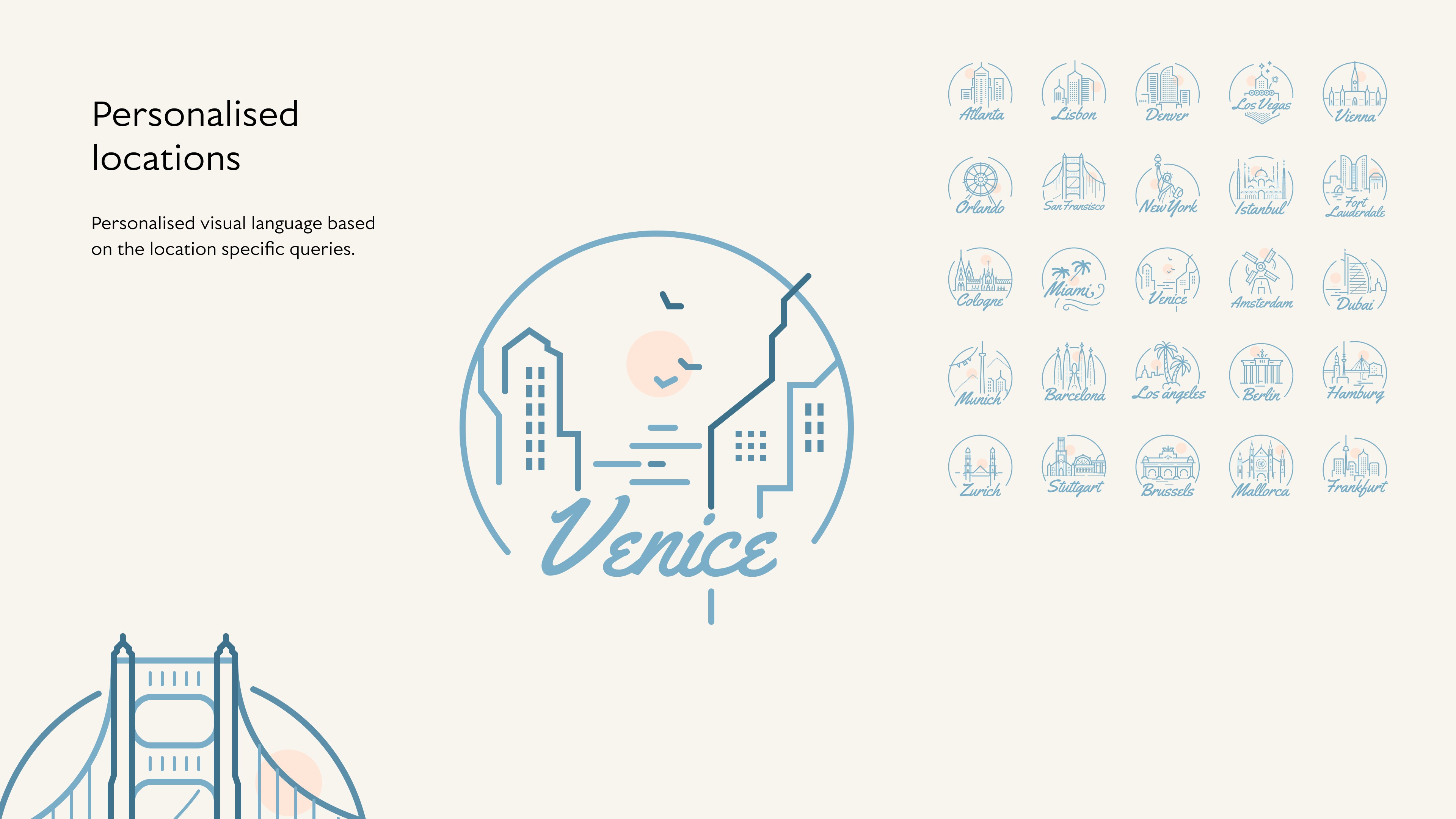
Personalised destinations
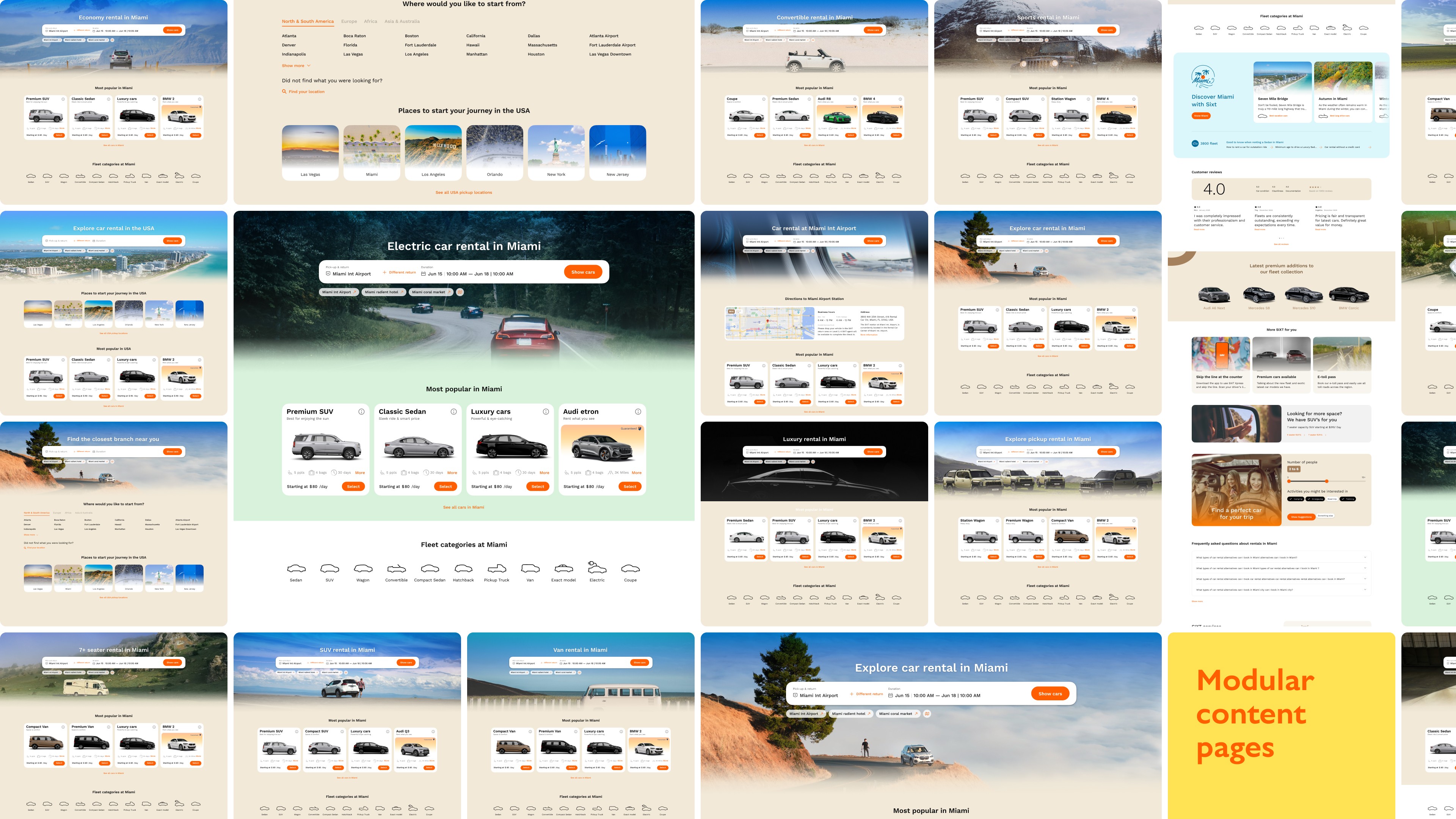
Composition System